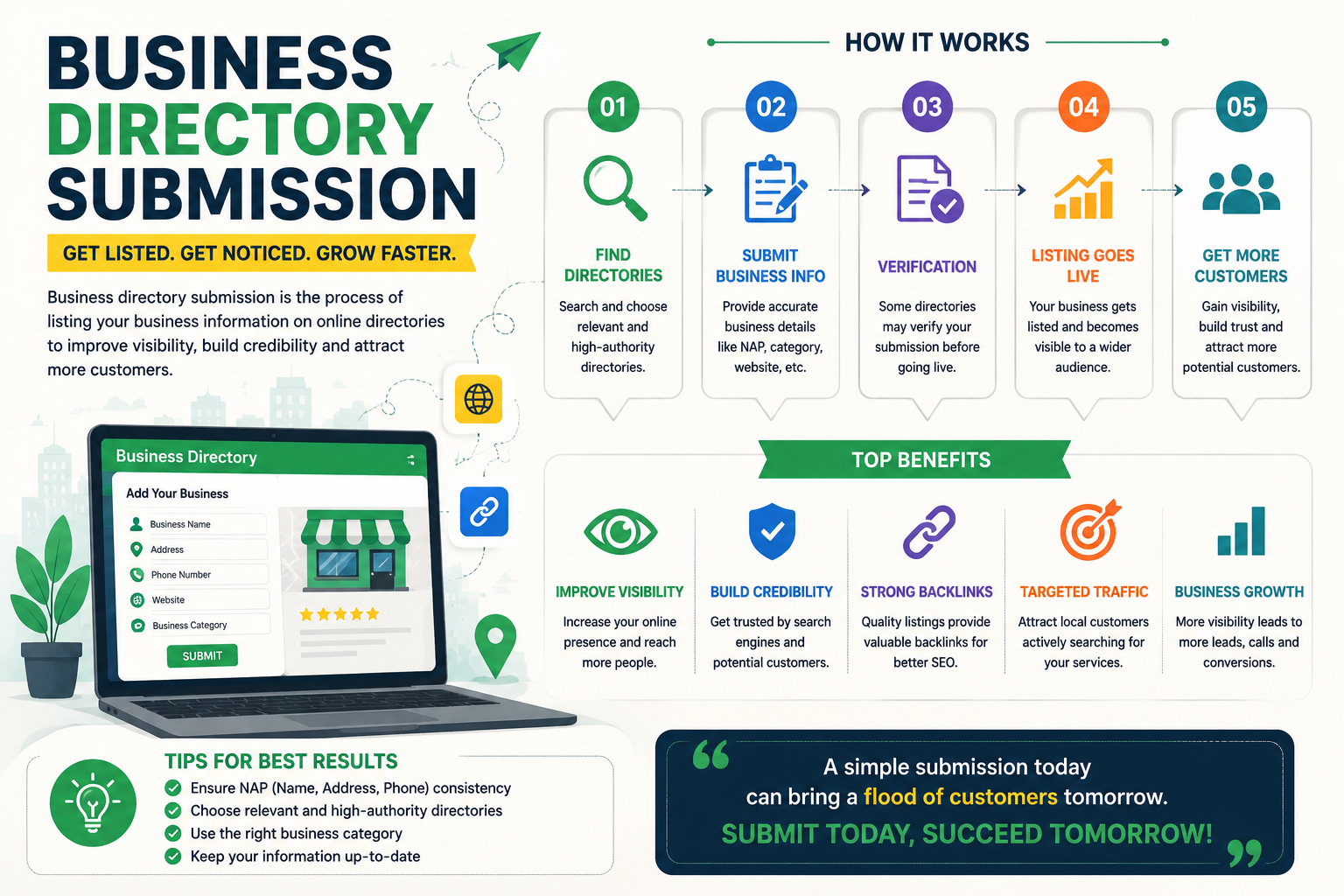
A business directory submission can take five minutes or half an hour, depending on how much information a platform requires. Multiply that by 50 or 100 directories, and directory building can quickly become a major time investment.
The problem is that not every submission deserves that investment.
Some directories can help customers discover your business, strengthen your presence in a specific market, or support your brand's credibility. Others may produce nothing beyond another profile page that nobody visits.
So instead of asking, "How many directories should I submit to?" a better SEO question is: "Which listings deserve my limited time?"
That shift in thinking can make directory work far more productive.
Focus on the Directories That Actually Matter
The number of directories where a business appears is not a useful success metric on its own.
Imagine two businesses. Company A has 150 directory listings, but most are on unrelated websites with little traffic. Company B has 20 carefully selected listings across relevant industry platforms, local resources, and trusted business networks.
Company B may have the stronger directory profile.
Why? Because the value of a listing is influenced by what it can actually do for the business.
Before submitting, consider four questions:
-
Can potential customers discover the business here?
-
Does the directory make sense for the industry?
-
Could the listing generate referral traffic or inquiries?
-
Does the platform add credibility to the company's online presence?
If a directory fails every test, it probably should not be at the top of your SEO task list.
How to Choose the Right Business Directory Submission for Your Customers
Many businesses automatically target the biggest directories first. That makes sense to a point, but there is another opportunity that often gets overlooked: the platforms closest to the customer's buying journey.
Consider a wedding photographer. A general business directory might provide some exposure, but a regional wedding vendor platform could be much more valuable because visitors are already looking for wedding-related services.
The same principle applies across industries.
A contractor might benefit from construction-focused platforms. A technology company could look for software and startup directories. A restaurant may find more value in food-focused discovery websites.
This is why the right business directory submission strategy starts with understanding where customers already search—not simply finding a list of directories and submitting blindly.
Build a Directory Shortlist Like an SEO Professional
Instead of maintaining a huge spreadsheet of every directory you can find, create a shortlist and score each opportunity.
A simple evaluation system can include:
Customer value: Could the listing realistically put the business in front of potential customers?
Topical fit: Is the platform connected to the company's industry?
Geographic value: Does it serve the locations where the business actually operates?
Profile quality: Can you create a useful, detailed business profile?
Maintenance: Is the directory actively managed and updated?
Business potential: Is there a realistic chance of traffic, leads, or brand exposure?
You do not need complicated software to do this. A basic spreadsheet is enough.
The advantage is that your team can focus on the 10 or 20 strongest opportunities instead of wasting hours chasing hundreds of weak ones.
Why SEO Directory Listings Are About More Than Backlinks
One of the biggest limitations in directory SEO is judging a listing almost entirely by the link it provides.
A directory profile can have value even when the link itself is not a major ranking signal.
For example, a listing may help a customer find your phone number. It may introduce your brand to someone who had never heard of your company. It may also create another trustworthy source that describes what your business does.
This broader perspective is particularly important when evaluating SEO directory listings for building a stronger online business presence.
Think of the listing as a digital business profile first and an SEO asset second.
If the profile can attract customers, support brand discovery, or provide useful business information, it has a purpose.
The Hidden Value of Local and Niche Platforms
Large directories get most of the attention, but smaller platforms can sometimes offer a better opportunity.
A regional business organization, city-based directory, industry association, or niche marketplace may have a much smaller audience. However, that audience can be significantly more relevant.
For local companies, local directories for business discovery can be particularly useful when they are closely connected to the communities they serve.
A directory with 5,000 highly relevant visitors may be more useful than one with 500,000 visitors who have no reason to become your customers.
This is an important distinction: audience quality often matters more than audience size.
Not Every Directory Deserves Your SEO Effort
Some warning signs should make you reconsider a submission.
Be cautious if:
-
The website contains thousands of unrelated listings.
-
Categories appear poorly organized.
-
Most pages look automatically generated.
-
The directory has no clear audience.
-
Business information is outdated or inaccurate.
-
The site exists almost entirely to sell links.
-
Your business would have no logical reason to appear there.
A directory does not become valuable simply because it offers a free submission.
In fact, free is often irrelevant to the decision. The real cost may be your team's time.
If an SEO specialist spends 20 minutes creating a profile that produces no traffic, no leads, and no meaningful visibility, that time could potentially have been spent improving a high-value page, earning a relevant mention, or fixing technical SEO issues.
Think About Opportunity Cost
This is where directory strategy becomes more interesting.
Suppose you have four hours available for off-page SEO this month. You could spend those hours submitting to 30 random directories—or use the time to secure five highly relevant listings, update existing profiles, and identify industry-specific opportunities.
The second approach may create fewer URLs, but it could produce more meaningful results.
The same principle applies to businesses using platforms such as Tekmag Lisings. The objective should not simply be to create another listing and move on. Take the time to build a complete profile that accurately represents the business and gives potential customers useful information.
A directory strategy works better when every submission has a reason behind it.
A Practical Test for Your Next Submission
Before creating your next listing, imagine that Google did not exist.
Would you still want your business to appear on that website?
If the answer is yes because the platform is trusted, relevant, or used by your target audience, the listing is probably worth considering.
If the only reason is "because it gives me a backlink," reconsider.
This simple test can eliminate a surprising amount of low-value SEO work.
Conclusion
The best business directory submission strategy is not built around reaching a specific number of listings. It is built around making better decisions about where your business deserves to be visible.
Prioritize platforms that connect your company with the right customers, industry, and communities. Evaluate directories based on their actual usefulness rather than relying only on SEO metrics.
Most importantly, remember that your time is an SEO resource too.
A smaller portfolio of carefully chosen listings can be more valuable than a massive collection of forgotten profiles. When every submission has a clear purpose, directory work becomes less about chasing links and more about building a credible, discoverable presence for your business.